May 15th, 2026
How to live free and maintain data sovereignty in the modern technological world.
Web 1.0
Around the late 90's, the internet was available for large scale consumer adoption.
During this time, society at large didn't know what the internet was, but the hype was real. Computer stores were popping up across the USA like weeds. Exciting and strange stories from the internet were heard from relatives, neighbors, and co-workers. Advertisements were pumping new jargon, like: World Wide Web, surfing the internet, AOL Keywords, eBay auctions, and H-T-T-P-Colon-Forward Slash-Forward Slash-W-W-W-dot-SomeSite-Dot-Com. If you or your company weren't already on the internet, you were being told that you needed to be on it right now.
These early days of the internet are now referred to as Web 1.0. This defines a time when the web was static and simple. Websites did not update dynamically. You had only a few account passwords to remember. Search engines weren't very good. Websites were personal and handcrafted; many displaying the infamous, "This site is under construction," animated GIF98a. And far worse was the villanous dancing baby.
You would learn of new places to visit through discovery or through word of mouth. You may have discovered a webring where you would flip through a collection of member's sites, like flipping channels on your TV for mostly static displays. But the internet was a promise of freedom and privacy. No one in those days would ever think of using their real name on it.
Computer's were not on the internet naturally. When you sat at the computer, you had to connect it by activating your computer's modem to dial a local phone number which was followed by the distictive modem handshaking sounds for the next minute or so. Once you were connected, you were excited to see that you had new emails in your inbox (imagine that!).
This was an exciting time. It was a time of wonder and discovery. The internet promised freedom.
Web 2.0
Somwhere around 2005 we began to see an explosion of social networking sites (though that term was popularized later). Other things like smart phones, Google Maps, and YouTube were the main attractions. This is where Silicon Valley made a big impact on society, civilization, and culture.
I refer to Silicon Valley as Silo-Con Valley, which is run by the Soyligarch Overlods (tongue in cheek humor). You see, the Soyligarchs centralized the internet into large silos, which they call ecosystems. It's in these silos where they conned us ("silo-con", you get it now!) to store our God given rights of freedom, privacy, and security--which they monetize for their dirty deeds.
You recall this scene from The Matrix, where Neo wakes up in a pod? Yeah, this is what the Soyligarch Overlords have done with us. Just like Neo and all of mankind were fed a virtual reality in exchange of being human batteries that powered the machine; we are fed algorithms by which we send the data of our personal lives to feed their machines and we are told, "you will own nothing and be happy".
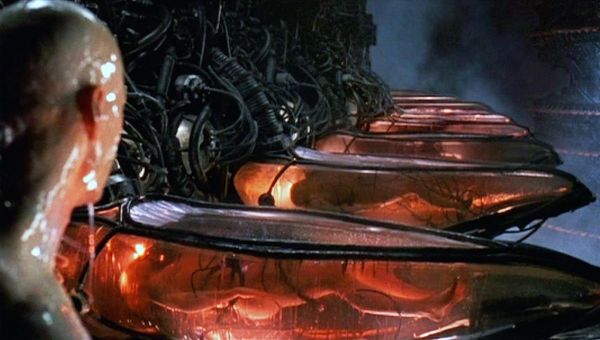
Many are taking the red pill and waking up but the majority are still unaware they are being used and they need your help.
It was horrifying for Neo to wake up and see to that gruesome reality. In a similar way (but less gruesome and less horrifying), it is hard for those of us to see how badly we've been conned into forgetting the freedom the internet promised us and how we freely surrendered that which is so precious to the Overlords.
They have a lot of power and a lot of money. So much so, that governments around the world are making laws around the devices and machinations they created. Now we are entering the AI era and data centers are being built all around the world.
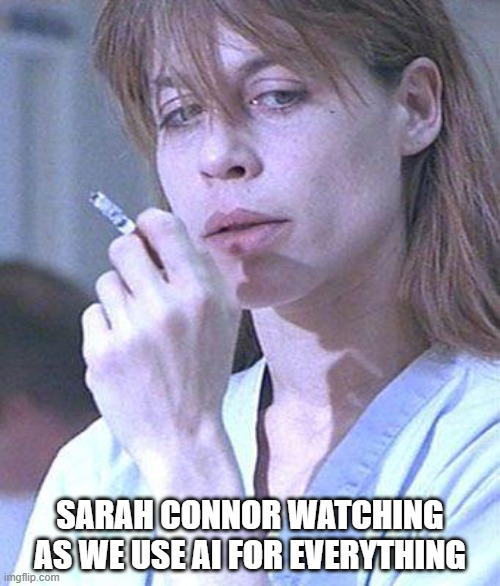
How did we get here?
It started in the early 2000's with social networks, like Myspace, Twitter, and Facebook. From there we saw ecosystems form, such as iCloud, M365, and Google. We told Facebook everything about our interests, families, friends, hobbies, and jobs simply because they asked.
Step-by-step we followed our new shephards into the valley; leaving the old world behind for the promise of a better world.
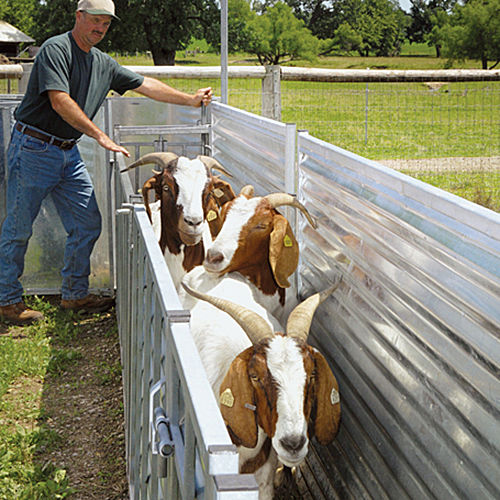
The software you fell in love with is not the same anymore. It's decayed to a point where it is no longer fun to use--it's frustrating. It doesn't offer exciting new features. It doesn't inspire creativity. Every update comes with the dread of not knowing if it's going to have the same features you once relied on. Not knowing if free features will be moved behind a paywall. You sigh when forced to create a cloud account for that same app that didn't require it yesterday. You are numb to the endless and ever-changing end-user license agreements; not knowing what freedoms and privacy you just agreed to give up because you are not an attorney. You are frozen, unable to move, don't remember the glory and the freedom of the internet as it once was. You have no hope that there will ever be anything better. You are a slave to it and you feel like livestock fed through a chute.
The Old Internet Is Still There and Better Than Ever
If you are old enough, you have to recall the time when you were excited to get home, turn on your computer, watch your monitor glow before you and listen to the crackle of its static; eager to connect to the internet, read your email, chat with friends, and check your favorite sites.
Compare that to today, where the internet feels like a chore or a task. It is something you try to escape from. You buried your feelings of guilt when using your phone during family dinner time and swiping-left while watching TV with your family. You've forgotten what good sleep feels like.
This is not healthy. You are trapped and there's a quiet voice deep inside your gut that says, "this isn't right".
There is hope! The Overlords have money and power, but their control is a psyop. They only have power so long as we willfully play their games. We have the advantage, but it doesn't come without sacrifice--the best things never do.
Web 3.0
Welcome to the decentralized web. A place of openness, sovereignty, ownership, and zero-trust. This is where we need to go to free ourselves from The Valley. It will happen when we work for a better future through sacrifice, blood, sweat, and tears. By word of mouth, by shepharding people out of the silos, like Moses, "Let my people go." Because the Overlords get their power through the free market, that means that every dollar we give them, or service of theirs we use, or free account we sign up for, we make them more poweful. In the same way, by choosing other products already on the market, we take away their power. They only have power so long as we continue to play in their sandbox. I will explain it more later on.
Escape the Silo
First, you must take the red pill, like Neo, and wake up and see how ugly it is out there. As I told a friend today, "we have to accept going back a step to when computers worked well most of the time. A time when things may break, and may require your friend, cousin, or neighbor, to help you in a jam. I say this, not as a selling point, but because some of the software that is designed for Web 3.0 is still baking in the oven. The good news is that it's at that moment where your kitchen is brimming with the aroma and you know it's time to set the table.
Take the First Steps
Start with social media. If you're old enough to remember life before social media, then you're old enough to remember the freedom you lost when you signed up. You're not getting any value from it. Stop pretending otherwise. Tell your friends and family (just the ones you talk to in real life) that you are closing your account because life is better without it. The others won't even know you're gone.

Next, your mobile phone needs to sit in a single place in your house (like your kitchen). It needs to become a home phone that doesn't move. You check your notifications there and make your calls there. You take it with you when you leave the house. Buy an old alarm clock for your nightstand and keep your phone in the kitchen over night.
Start deleting as many apps as possible. The other day I wanted to check my bank account and forgot that I deleted the app. It felt weird at first, but then I reminded myself that I once lived a life where you couldn't see your bank account on your phone and life still went on. 10-seconds later and I didn't care. I still never checked the account, because there was never a real reason to do so in the first place.
The idea here isn't to reject technology, but to remind ourselves that it's a tool and tools have a time and a place when they are needed. The always-on, always-present, always-nearby lifestyle that we've become attached to is not compatible with our design and it needs to live in a controlled and limited space in our lives.
Search Engines
It starts here because this is the main brain control center of Big Silicon. Spying and moulding your thoughts.
 Start using SearXNG as your search engine and stop using all mass surveillance search engines, now! No more Schmoogle or bingbong. Delete any shortcuts and replace your muscle memory with your new search engine. Believe me, it will take a while to break the habit. You need to change your default search enging in your browser, as well! SearXNG, is a stupid name, but it is a meta search engine. Typing in your search query will produce an aggregated response from multiple search engines. Plus, every search query is randomized so the gay soy boys can't build a profile on you. Pick a SearXNG public instance from this list and bookmark it or host your own. For other suggestions, you can try Brave Search or Mojeek.
The Soyligarchs have been highly successful at funneling nearly all email through their networks. Even if your email is hosted with someone you trust, chances are you are corresponding with someone who is using gmail or outlook. This is a problem because your emails are being read byh their AI systems. Reading, cataloging, and making data profiles on you. They sell this information and hand it over to law enforcement.
The big trick here is that all email systems are using the same email protocol (SMTP) which was published over 20-years ago; back in time when security was secondary to function. Even "secure mail" providers are only telling you half of the story. Email is transported from one mail server to another using TLS (transport layer seucirty). The smoking gun here is in the name "transport". This means your email, if intercepted during transport, would be unreadable. But what does that mean for the receiving email server? They are not the transport, but the destination. They decrypt your message before it reaches your inbox. This is how your emails are being read. They clone the traffic from the email recieve connector.
The only way to ensure your emails are readable by only your recipient is to encrypt them with GPG. It's not that hard to do, but as you and your recipients get setup with it, it becomes easier. Unforntunately, only a small perctage of people are using this--and that needs to change.
If your email is with Microsoft, Google, Apple, or hosted by a Silo-con Valley corp--do this now--register a new email address with someone who is under the jurisdiction of Switzerland law. Proton Mail comes to mind, but there is also Migadu.com. The latter is far cheaper. Create a GPG private/public key set and share your public key with your recipients. All they have to do is import the key and share their public key with you.